Kloepping branch · Generation 8 · ID I82
Lüdeke Bracht
ca. 1585 – 1622-12-13
- Newly added by the research expansion; not yet independently re-checked
Facts
- Born
- ca. 1585
- Birthplace
- Vahlhausen Amt Detmold, Principality of Lippe, Germany
- Died
- 1622-12-13
- Place of death
- Vahlhausen Amt Detmold, Principality of Lippe, Germany
- Buried
- 1622-12-14
- Burial place
- Detmold, Principality of Lippe, Germany
- Occupation
- Vollspänner on Hof Vahlhausen Amt Detmold Nr. 6
Relationships
- Child Annen Bracht
Research notes
Earliest documented progenitor of the Bracht family on Hof Vahlhausen Amt Detmold Nr. 6; direct ancestor of Anna Marie Wilhelmine Louise (Louisa) Bracht.
Life and times
General historical context. This section describes the times and places this person lived in. It is not documented fact about them; “likely” means just that.
Places
- Vahlhausen Amt Detmold, Principality of Lippe, Germany ca. 1585-1622
- Detmold, Principality of Lippe, Germany 1622
What was happening
- 1600 Detmold Witch Trials and Regional Moral Panic · Amt Detmold, County of Lippe, Holy Roman Empire
Coming of age as a young farmer in Vahlhausen near Detmold, Lüdeke would have likely witnessed the dread and social tension caused by intense judicial interrogations and witch burnings conducted by local courts. Source - 1605 Introduction of the Reformed Confession by Count Simon VI · County of Lippe, Holy Roman Empire
As a parishioner near Detmold, Lüdeke would have likely experienced religious upheaval and church reordering when Count Simon VI decreed the conversion of Lippe from Lutheranism to the Calvinist Reformed faith. Source - 1609 Succession on Hof Vahlhausen Nr. 6 as Vollspänner · Vahlhausen Amt Detmold, County of Lippe, Holy Roman Empire
Assuming stewardship of Hof Nr. 6 around 1609, Lüdeke would have likely held Vollspänner status, obligating him to provide full horse-team draft services and estate dues to the Count of Lippe. Source - 1613 Lippe Succession Dispute and Partition of the County · County of Lippe, Holy Roman Empire
Following the death of Count Simon VI, Lüdeke would have likely experienced bureaucratic uncertainty and tax audits as Lippe's domains were contested and subsequently partitioned among noble heirs. Source - 1618 Outbreak of the Thirty Years' War · Holy Roman Empire (Lippe)
Living just outside the ducal seat of Detmold, Lüdeke would have likely observed mounting anxiety and defensive militia musters as imperial war ignited across the German principalities. Source - 1621 Kipper- und Wipperzeit Currency Debasement and Hyperinflation · Westphalia and Lippe, Holy Roman Empire
During his final years on the farm, Lüdeke would have likely suffered severe economic disruption as rampant coin debasement ruined trade and triggered wild food price spikes across Westphalia. Source
In context
Lüdeke Bracht lived during a volatile and defining era in northwestern Germany, spanning the late Renaissance, the Protestant Reformation, and the catastrophic opening years of the Thirty Years' War. Born around 1585 in Vahlhausen within Amt Detmold, he belonged to an established Lippische peasant lineage. By 1609, he established his household and assumed stewardship of Hof Vahlhausen Amt Detmold Nr. 6 as a Vollspänner—a substantial peasant farmer possessing a complete four-horse team capable of heavy plowing and obligatory feudal cartage for the Count of Lippe. Lüdeke navigated profound social changes, including the controversial conversion of Lippe from Lutheranism to the Calvinist Reformed confession under Count Simon VI in 1605, as well as the dark shadow of regional witch persecutions in Detmold. In his later years, he struggled against the severe monetary hyperinflation of the Kipper- und Wipperzeit, when debased coinage wreaked havoc on agricultural markets. Lüdeke passed away at Hof Nr. 6 in December 1622 at approximately thirty-seven years of age, being buried in Detmold and leaving his farm to his daughter Annen.
Pictures from their world
Public-domain and openly licensed images of the places and times this person lived in. None are photos of this person; documents are period examples only.
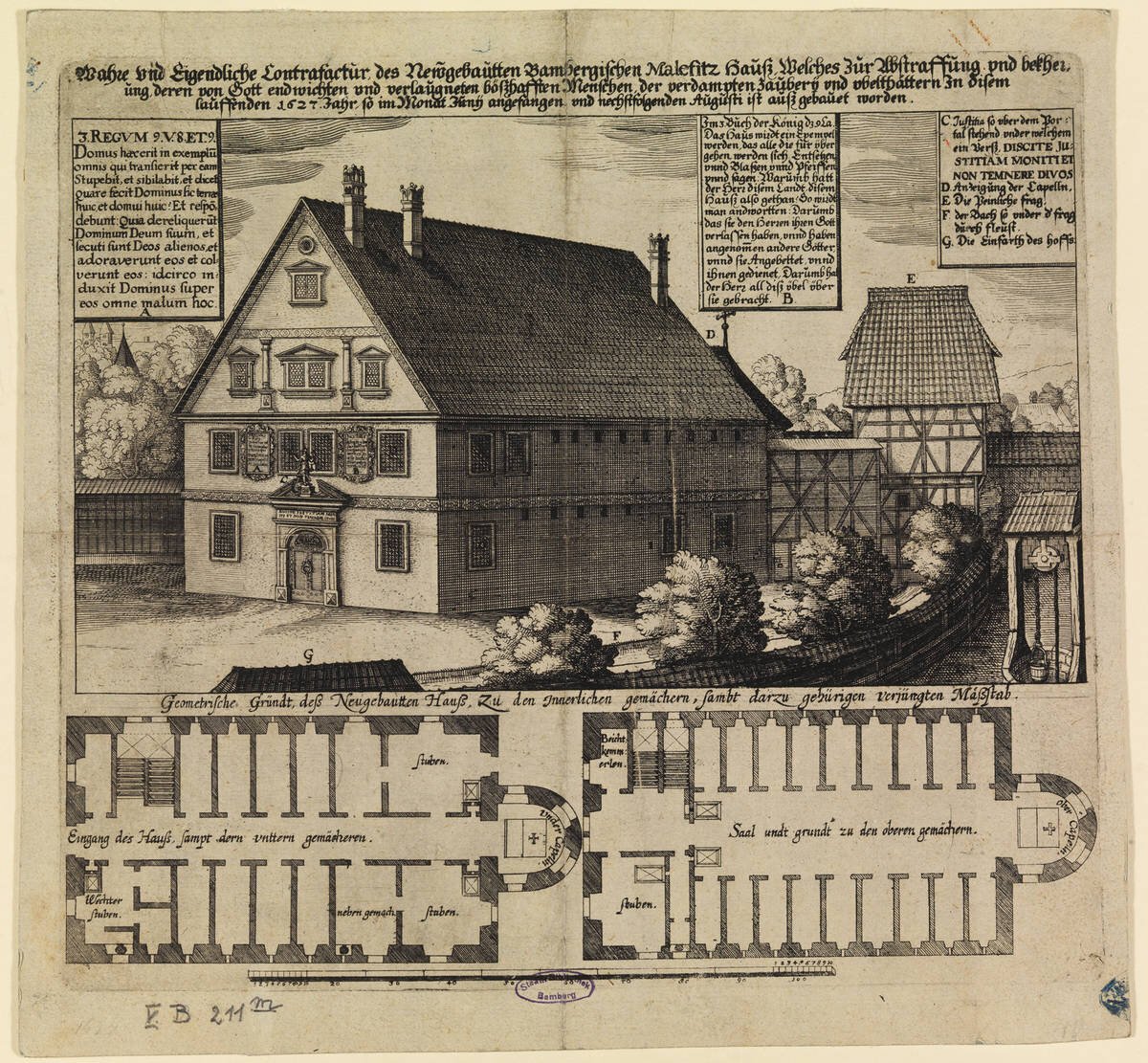
Exterior view with floor plans of the Bamberg Malefizhaus/Drudenhaus, in which those accused of witchcraft were imprisoned and embarrassed. Copper engraving, 1627 (Staatsbibliothek Bamberg, V W 221 m)Unknown author Unknown author, 1627. Public domain. Source

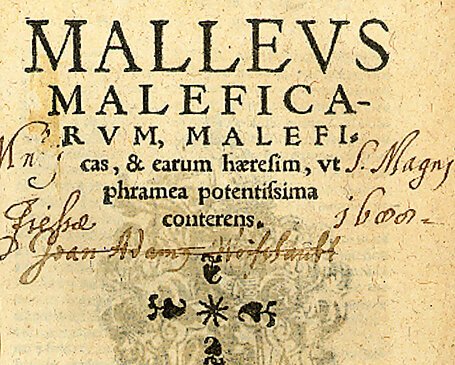
The Hammer of Witches which destroyeth Witches and their heresy like a most powerful spear [ 1 ]Unknown author Unknown author, 1520. Public domain. Source

Alexander von Oheimb, Bevollmächtigter des Fürstentums Lippe, beim Norddeutschen Bund, 1867.Hermann Scherenberg., 1867. Public domain. Source

Fürst Alexander zur LippeUnknown author Unknown author, 1850. Public domain. Source
