Stories · Family narrative
The Name on the Land
The Story of the Kloepping Family, from the Farms of Lippe to the American Plains
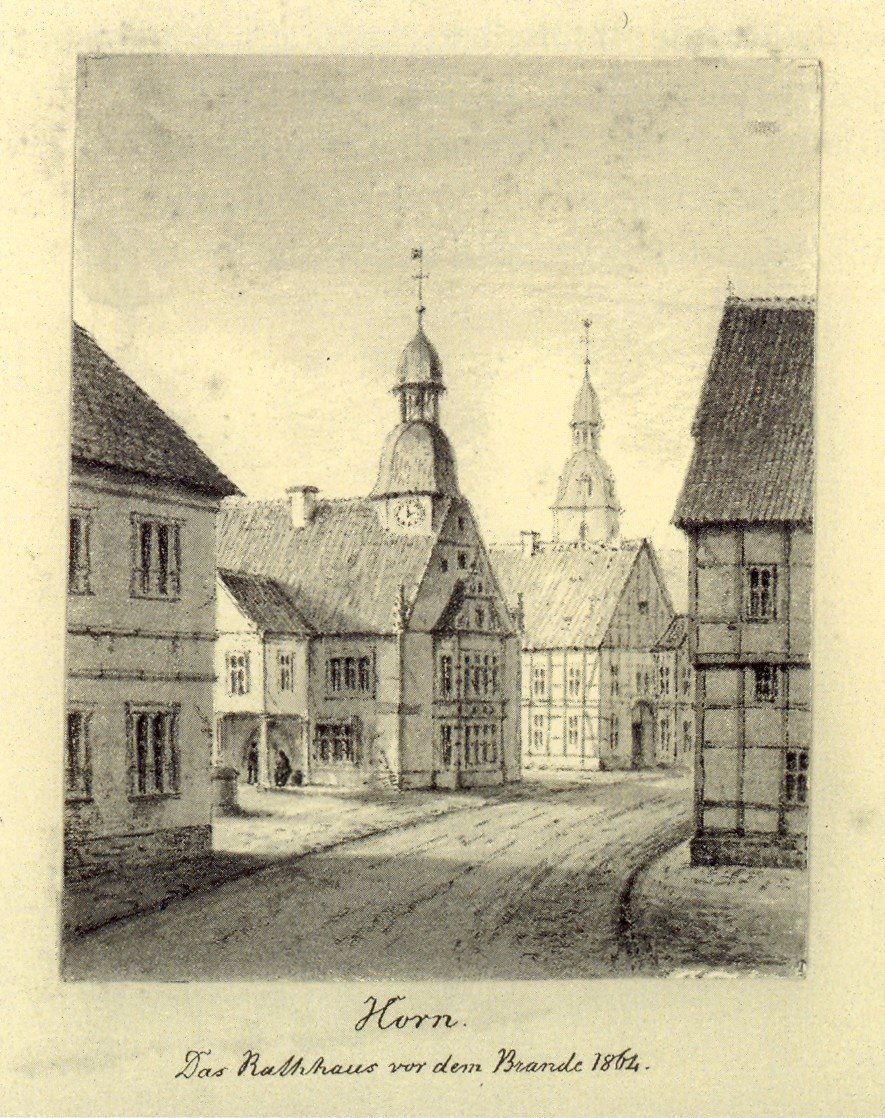
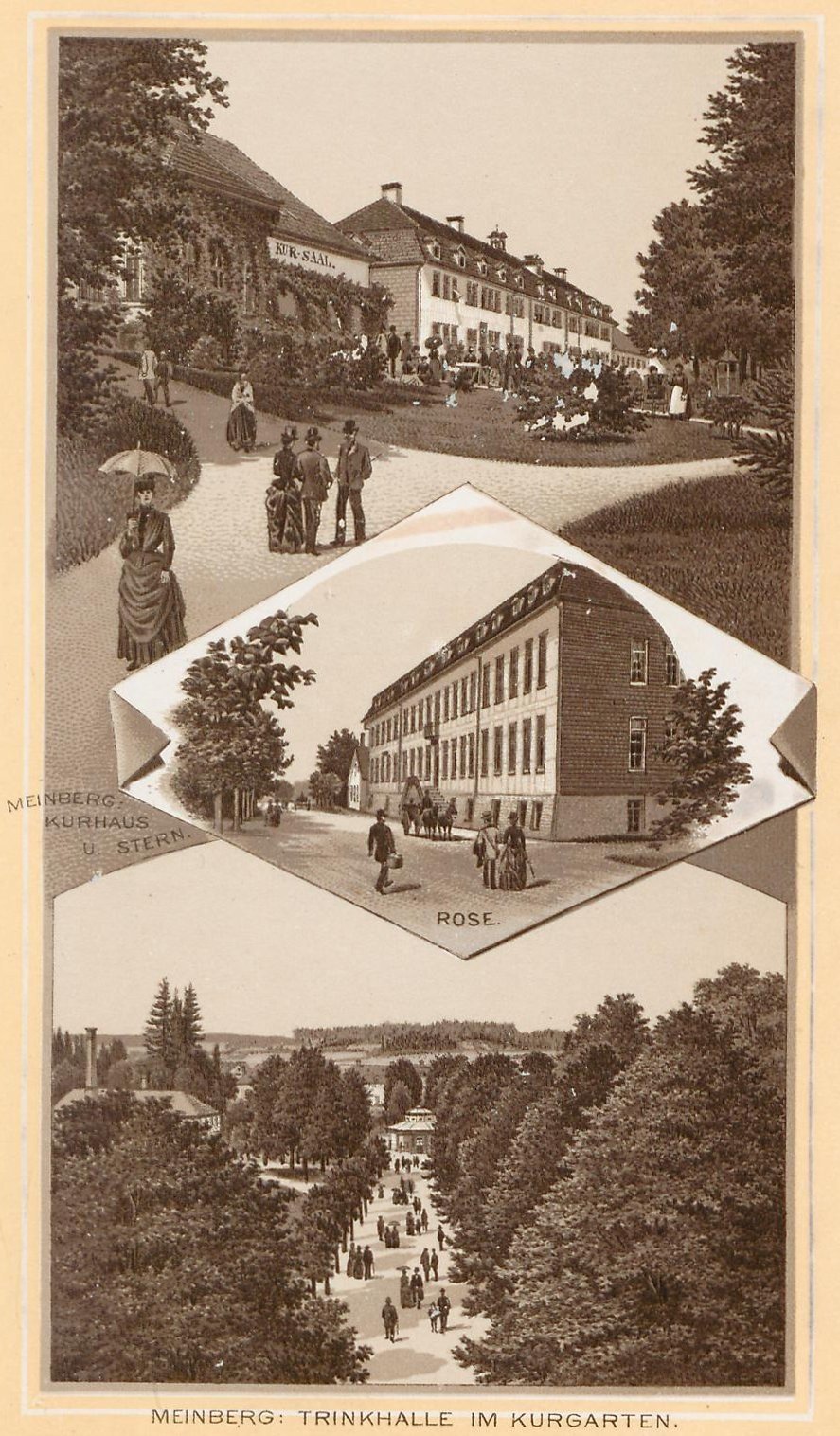
Illustrations show the region and period of the story. None of them shows Haus Nr. 62 itself.
Contents
- Prologue“Not a Kloepping by Blood”
- Chapter OneWhere the Farm Kept the Name
- Chapter TwoThe Oldest Roots — The Brachts of Vahlhausen
- Chapter ThreeThe Little Farm at Meinberg Nr. 62 (1774–1811)
- Chapter FourAnna Amalie’s Two Husbands (1811–1834)
- Chapter FiveThe Brickworker and the Bracht Daughter (1834–1854)
- Chapter SixThe Crossing (1854) and the Illinois Years
- Chapter SevenWestward to Plum Creek (1886)
- Chapter EightBurrell and Minnie
- Chapter NineRed and Anna Jewell
- Chapter TenThe Present Generation
- EpilogueThe Name That Left the Land
- Notes on the Records
- Sources
- Illustration Credits
Prologue
“Not a Kloepping by Blood”
Every family has a story it passes down without being quite sure it’s true. For the Kloeppings, it was about the man who brought the name to America.
For a long time this was just a curious bit of family talk. Then came the church books of a small parish in northwestern Germany, the marriage records of a princely government, and the careful farm lists that local historians have compiled from them. They showed that the old story was true, and more interesting than anyone had guessed.
Wilhelm Klöpping, the brickworker who sailed for America with his wife in 1854, really was not a Klöpping by birth. His father was a Kuhlmann. Wilhelm carried the name Klöpping for one reason only: he was born on a small farm in the village of Meinberg, house Nr. 62, and in that part of the world the name belonged to the farm.
This is the story of how that name came to the farm, how it came to Wilhelm, and how he and his wife Louisa carried it across an ocean, to the prairies of northern Illinois and then to the Platte River valley of Dawson County, Nebraska. That is where four generations of Kloeppings now rest in one country churchyard.
Chapter One
Where the Farm Kept the Name
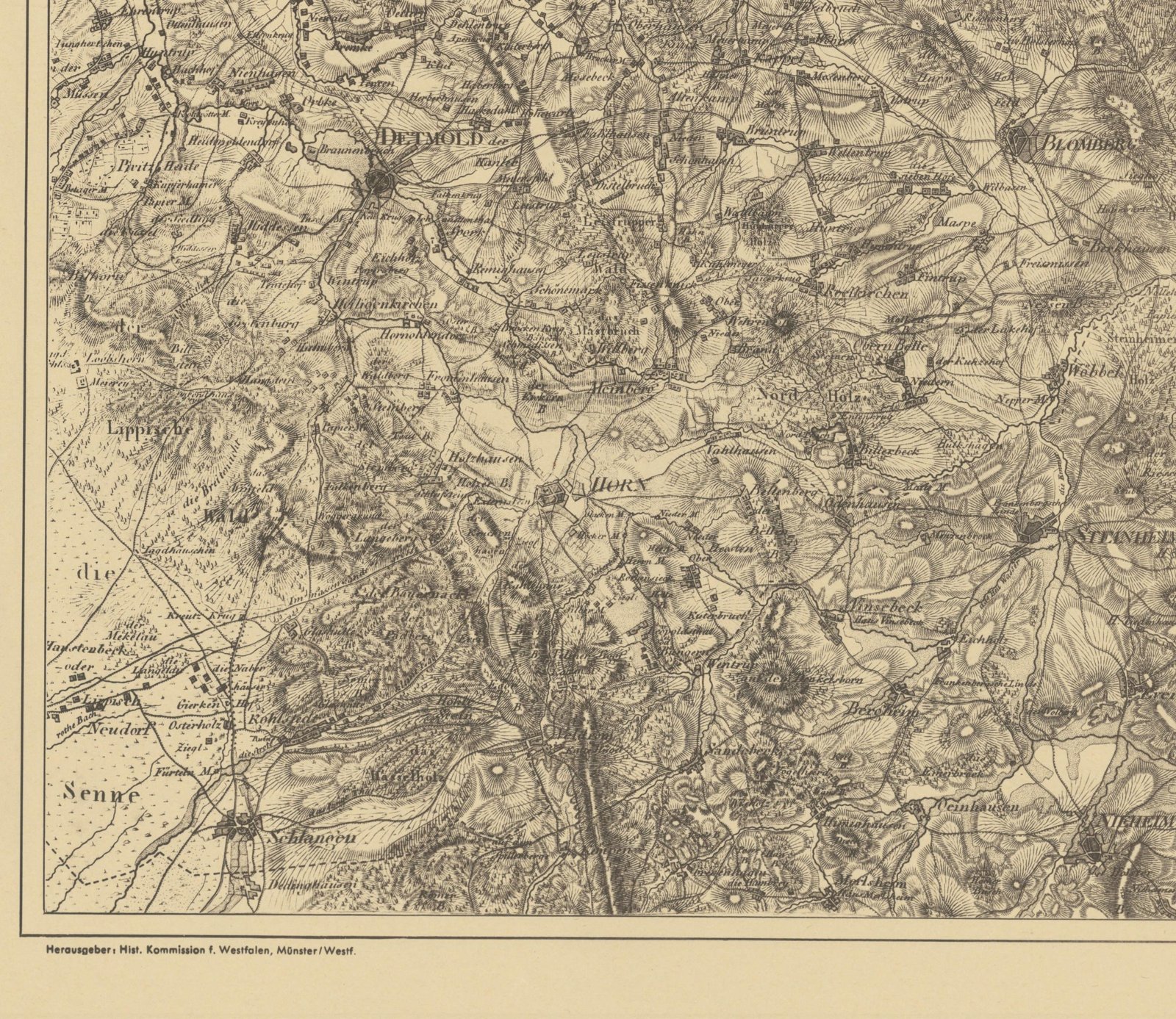
The family’s German roots lie in the Principality of Lippe (often called Lippe-Detmold), a small state ruled from the town of Detmold by its own princes. Its countryside was organized around numbered farmsteads. Each one had a permanent number in the land register, such as Meinberg Nr. 20, Meinberg Nr. 48, Meinberg Nr. 62, or Vahlhausen Nr. 6, and each belonged to a rank that reflected its size and its duties to the prince:
- Vollspänner: the largest farmers, able to keep a full team of draft horses.
- Großkötter, Mittelkötter, Kleinkötter: large, middling, and small cottagers, who held a house and modest fields and often earned extra money from a craft or wage work.
- Hoppenplöcker: smallholders on the lowest landed rung, with little more than a cottage and garden.
- Einlieger and Tagelöhner: landless lodgers and day laborers, who rented rooms on other people’s farms and worked for wages in the fields or the brickyards.
Whoever held a farmstead, large or small, could be called its Colon.
To keep farms whole and the tax rolls tidy, Lippe followed an old rule known as the Hofnamensitte, the farm-name custom. Under it, the farm mattered more than the family tree. The surname belonged to the farm, not to the bloodline. When a farm passed to a daughter who was its heiress, or was held by a widow, any man who married her and took over the farm was required by the authorities to take the farm’s name as his own.
The pastors who kept the parish books recorded these changes with small connecting words: wird (“becomes”), vulgo or genannt (“called”), and oder (“or”). A man born Middeke who married the Bracht heiress became Middeke wird Bracht. A Köller who married into the Schneider farm became Köller wird Schneider.
On the little farm at Meinberg Nr. 62, this custom changed a man’s name twice in forty years. In 1774 it turned a Leweke into a Klöpping. In 1813 it turned a Kuhlmann into a “Leweke oder Klöpping”. The second of those men was Wilhelm’s father.
Chapter Two
The Oldest Roots — The Brachts of Vahlhausen
The oldest ancestor in this book is not a Klöpping at all. He belongs to the family of Wilhelm’s future wife, Louisa Bracht, whose people held one farmstead for more than two centuries: Hof Vahlhausen Amt Detmold Nr. 6.
The earliest of them on record is Lüdeke Bracht, born around 1585 in Vahlhausen. He was a Vollspänner, a farmer of the top rank with a full team of horses. Lüdeke died on December 13, 1622, in the early years of the Thirty Years’ War, and was buried in Detmold the next day.
His farm passed to his daughter and heiress, Annen Bracht, born about 1610. On April 29, 1638, in Detmold, Annen married Johann Middeke. Following the custom, he took the farm’s name and became Johann Middeke wird Bracht. So the Bracht name, too, was kept alive through a daughter. Annen lived to about seventy-six and died at Vahlhausen on September 7, 1686. She was buried in Detmold.
We cannot yet name every generation between Annen and the Brachts of the early 1800s. But the farm and its name lasted, and we will meet them again when a Bracht daughter marries a young brickworker from Meinberg.
Chapter Three
The Little Farm at Meinberg Nr. 62 (1774–1811)
In the middle of the eighteenth century, the Klöpping name in Meinberg belonged to Johann Hermann Klöpping, who held farm Meinberg Nr. 48 (one record calls him a Colon, another a Kleinkötter), and his wife Sophie Amelung. The small farm at Meinberg Nr. 62 came to their eldest surviving daughter, Anna Maria Elisabeth Klöpping, born in Meinberg in 1752. The records do not say how Nr. 62 came into the family.

As heiress of Nr. 62, Anna Maria Elisabeth, about twenty-two, married Carl Henrich Leweke (sometimes spelled Läweke) in the church at Meinberg on October 9, 1774. Carl Henrich was born around 1750. His marriage record names him as the surviving son of the late Jürgen Läweke, a landless lodger in Brakelsiek, in the district of Schwalenberg. In translation, it reads:
Anna Maria Elisabeth, surviving legitimate eldest daughter of the Kleinkötter Johann Hermann Klöpping of Meinberg, and heiress of Nr. 62 … marries Carl Läweke, surviving son of the Einlieger Jürgen Läweke of Brakelsiek, Amt Schwalenberg.
By marrying the heiress and taking over the farm, Carl Henrich took its name. From then on the parish books called him Carl Henrich Leweke wird Klöpping, or simply Carl Klöpping.
The couple had one recorded child, a daughter, Anna Marie Sophie Elisabeth, born May 24, 1779, and baptized in Meinberg six days later. She died at fifteen, on September 8, 1794. Less than three years later, on March 1, 1797, her mother died too, at about forty-five. After that, no one of Klöpping blood remained on the little farm. But the name stayed, and so did the farm, with the widower Carl Henrich.
Recorded as “Witwer Carl Klöpping in Meinberg” (“the widower Carl Klöpping”), he married again on October 8, 1797. His bride was twenty-four-year-old Catharina Agnetha Merck (also recorded as Hofmeister or Hoffmeister), born November 28, 1772, in nearby Wehren. She was the daughter of Johann Henrich Merck vulgo Hoffmeister, a smallholder (Hoppenplöcker) at Wehren Nr. 16, and Dorothea Ilsabein Witte. They were married for nearly fourteen years and had no children. Catharina Agnetha died at Meinberg Nr. 62 on August 3, 1811, at thirty-eight.
Chapter Four
Anna Amalie’s Two Husbands (1811–1834)
Carl Henrich was now past sixty, with a farm to keep and no heir. On November 10, 1811, he married for a third time. His bride was twenty-six-year-old Anna Amalie Sophie Schneider, born October 9, 1785, at Vahlhausen Amt Horn Nr. 6.
Anna Amalie’s own family had been shaped by the same custom. Her father, Johann Jobst Henrich Köller wird Schneider, was a Mittelkötter at Vahlhausen Amt Horn Nr. 6. He was born a Köller and took the farm name Schneider. Her mother was Ilsabein Altemeyer, from Vahlhausen Amt Detmold. When Anna Amalie came to Nr. 62 as Carl Henrich’s wife, the register recorded her as Anna Amalie Sophie Schneider wird Leweke.
The marriage was short. Carl Henrich Leweke wird Klöpping died at Meinberg Nr. 62 on July 19, 1813, at about sixty-three, and was buried four days later. His young wife was expecting their child. A little over five weeks after his death, on August 26, 1813, she gave birth to a son, Carl Henrich’s heir: Johann Friedrich Konrad Leweke oder Klöpping.
Anna Amalie was left alone with a newborn and a farm to run, in the middle of the Napoleonic Wars. On November 28, 1813, about four months after Carl Henrich died, she married again at twenty-eight in the Meinberg church. Her new husband was Simon Henrich Kuhlmann, born around 1776 on Meinberg Nr. 20, son of Christoph Henrich Kuhlemann, the Colon of Nr. 20, and Anna Marie Galius Schlingmann (also written Schlinkernst or Schlinkfritz).
By marrying the widow of Nr. 62, Simon Henrich took on its name as the custom required. The name he took carried both earlier families: Simon Henrich Kuhlmann wird Leweke oder Klöpping. He was now the Colon of the little farm, and the records also call him a Tagelöhner, a day laborer. That was a common pairing for men on small holdings, who farmed their own patch and worked for wages besides.
Wilhelm Is Born
The marriage of Simon Henrich and Anna Amalie produced one son: Wilhelm Klöpping, born in Meinberg around 1815. The parish register records him as Wilhelm Klöpping (Klepping, oder Leweke).
Here is the answer to the family riddle. By blood, Wilhelm was a Kuhlmann on his father’s side, from the family on farm Nr. 20. On his mother’s side he came from the Köller-Schneiders and Altemeyers of Vahlhausen. Not a drop of Klöpping blood ran in his veins. Only the name came from the farm, and it was the name he would carry to America.
Wilhelm was only about four years old when his mother died at Meinberg Nr. 62 on December 7, 1819, at thirty-four. Three months later, on March 12, 1820, his father married Sophie Henriette Elisabeth Otto, born in Meinberg in 1800. She joined a household with two small boys: Wilhelm and his older half-brother, Johann Friedrich Konrad. No children of that marriage are recorded. Simon Henrich died at Nr. 62 on October 10, 1834, at fifty-eight, and was buried in Meinberg three days later. Wilhelm was about nineteen.
Chapter Five
The Brickworker and the Bracht Daughter (1834–1854)
After Simon Henrich’s death, Nr. 62 passed to Wilhelm’s older half-brother Johann Friedrich Konrad, the son of Carl Henrich Leweke wird Klöpping, who became its Kleinkötter. On November 17, 1839, he married Friederike Weber, born August 25, 1815, in Leopoldstal. After she died in Meinberg on June 3, 1852, he married Sophie Luise Ilsabein Bracht, born December 29, 1821, in Erdbruch, on October 31, 1852.
As the younger son, Wilhelm did not inherit the farm. He made his living at the trade Lippe was known for: he was a Ziegelarbeiter, a brickworker, living at Meinberg Nr. 47.
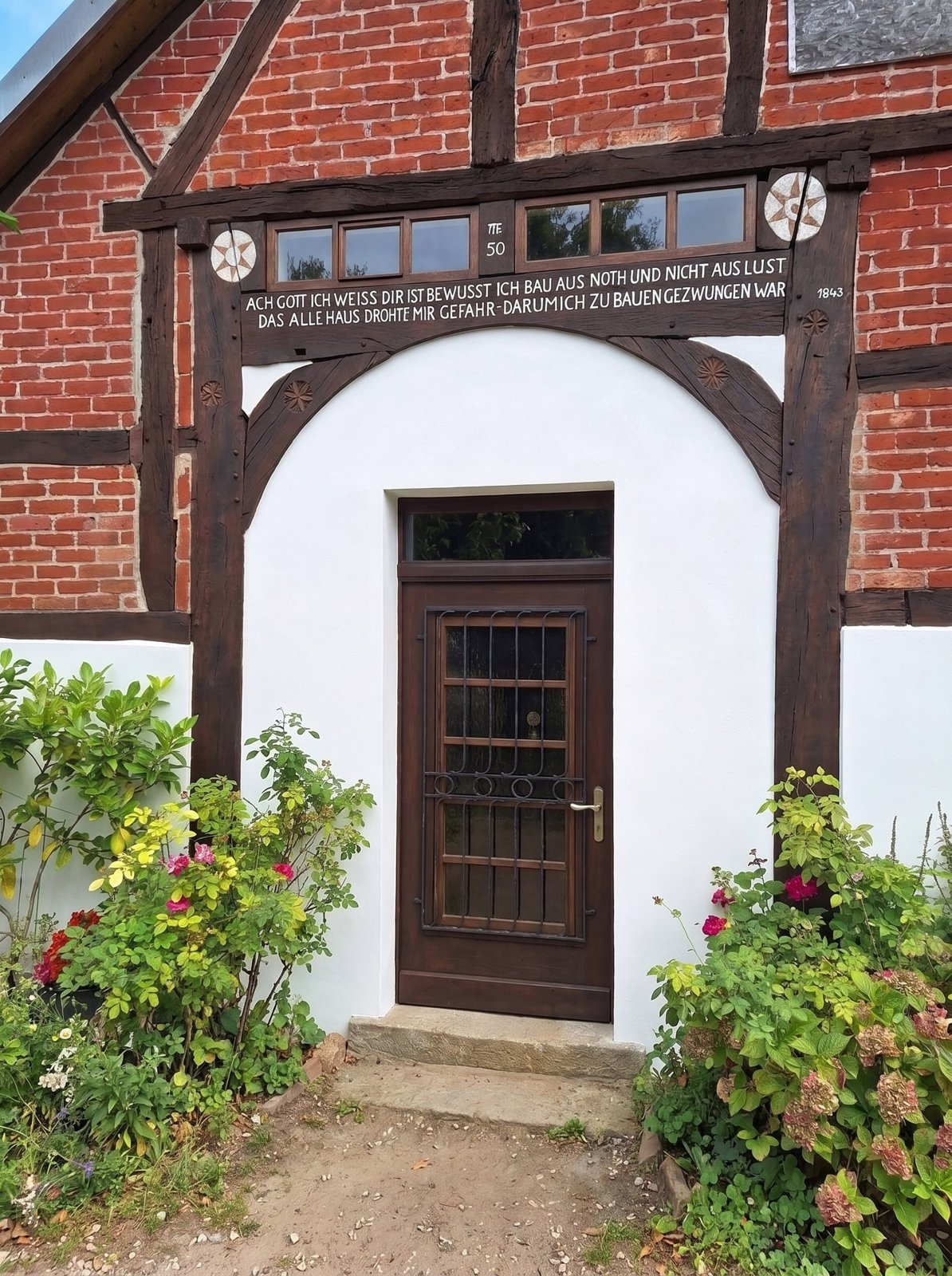
On February 12, 1843, in the church at Meinberg, Wilhelm married Anna Marie Wilhelmine Louise Bracht. In Germany she was Louise; in America she would be Louisa. She was a daughter of the Bracht farm whose story began in Chapter Two. Her father, Simon Henrich Bracht, was a Großkötter who held Vahlhausen Amt Detmold Nr. 6, and her mother was Anna Christine Charlotte Bähr. Louisa was born there on June 17. Some records give the year as 1819, but her gravestone in Nebraska (seventy-eight years and twenty days at her death on July 7, 1898) points to 1820.
So the brickworker who carried a farm’s borrowed name married a woman whose family had held its own land and name since the days of Lüdeke Bracht.
Chapter Six
The Crossing (1854) and the Illinois Years
Wilhelm and Louise had been married eleven years when they decided to leave. No letter or record tells us why. Like many families from Lippe in those years, they may simply have seen more promise across the ocean than at home. The government of the principality recorded their departure in 1854. Their entry survives in the Lippe state archives at Detmold and in Fritz Verdenhalven’s published index of Lippe emigrants, under the reference XI. 1086.
They made their way north to the port of Bremen and boarded the German bark Anna Delius, commanded by Captain W. Hattendorff. With 358 passengers aboard, the ship crossed the Atlantic, entered the Gulf of Mexico, and arrived at New Orleans on May 13, 1854.
From New Orleans the couple traveled up the Mississippi to northern Illinois and settled in Stephenson County. There the family was recorded in Dakota, Rock Grove, and Freeport. In this new country Klöpping became Kloepping, Louise became Louisa, and Wilhelm the Lippe brickworker became an Illinois farmer.
On September 19, 1860, in Rock Grove, Wilhelm and Louisa’s son Frederick C. Kloepping was born. He grew up on the Stephenson County prairie, and on October 1, 1881, he married Susan Hadassah Cain, an Illinois girl born August 31, 1865.
Chapter Seven
Westward to Plum Creek (1886)
After thirty-two years in Illinois, the family moved west once more. In 1886, Frederick and Susan Kloepping made a new home at Plum Creek, later renamed Lexington, in Dawson County, Nebraska. Frederick’s parents, Wilhelm and Louisa, came with them. Wilhelm was now past seventy, still following the frontier.
That same year, on February 19, 1886, Frederick and Susan’s son Burrell Kloepping was born in Dawson County.
The family put down roots in the Buffalo Grove community, and the Buffalo Grove Presbyterian Church Cemetery became the resting place of four generations of Kloeppings. The first of them were laid there within a few years of each other:
- Louisa (Bracht) Kloepping died in Dawson County on July 7, 1898, aged seventy-eight years and twenty days. More than half a century earlier she had left the Bracht farm at Vahlhausen.
- Susan Hadassah (Cain) Kloepping, Frederick’s first wife and Burrell’s mother, died on May 18, 1900, at thirty-four. Her stone reads: Susan Kloepping, Nee Cain, 8/31/1865 – 5/18/1900. Burrell was fourteen.
- Wilhelm Kloepping, the brickworker of Meinberg Nr. 47, born on the little farm at Nr. 62, died in Dawson County on March 20, 1904, aged ninety according to his gravestone. He was laid to rest in the same churchyard as Louisa, half a world from the farm that had given him his name.
Chapter Eight
Burrell and Minnie
Burrell Kloepping grew up on the Dawson County plains and married Minnie Sophia Pieper, born March 31, 1886, the same year as Burrell. Their shared gravestone at Buffalo Grove reads simply:
KLOEPPING — Burrell 1886–1937 / Minnie 1886–1960
Burrell registered for the World War I draft in Dawson County in 1917–1918. On October 6, 1922, he and Minnie had a son, Warren Robert Kloepping, whom everyone would come to know as “Red.”
The year 1937 was hard on the family. Burrell died on March 14, 1937, at fifty-one. Nine months later, on December 7, 1937, his father, Frederick C. Kloepping, died in Lexington at seventy-seven. The Illinois-born son of two Lippe emigrants, he had come west with his parents half a century earlier. Minnie lived twenty-three more years and died on September 5, 1960, at seventy-four. All three rest at Buffalo Grove.
Chapter Nine
Red and Anna Jewell
Warren Robert (“Red”) Kloepping was born at Lexington, Nebraska, on October 6, 1922, according to his obituary. He grew up during the Great Depression and knew loss early. At fourteen he lost his father, and that December, just after his fifteenth birthday, his grandfather. During the Second World War he served in the United States Army from 1944 to 1946.
Home again in Nebraska, Red married Anna Jewell Williams on April 2, 1947, in Holdrege, Nebraska.
Anna Jewell’s Family
Anna Jewell Williams Kloepping was born on January 19, 1926, into a Dawson County pioneer family of her own.
Her father was George Howe Williams (July 9, 1886 – April 7, 1936). Anna Jewell was ten when he died. Her mother was Laura F. Campbell (her initial appears as both F. and E.; April 26, 1893 – October 14, 1969), the daughter of George McWilliams Campbell and Addie Pauline Jewell. Anna Jewell’s middle name matches her grandmother Addie’s maiden name. George and Laura rest side by side in Fairview Cemetery in Cozad.
Her Williams grandparents were Charles C. Williams (1852–1908) and Martha Anna McCance. Martha was born February 19, 1859, in Toulon, Stark County, Illinois. She and Charles married on February 16, 1882, in Cass County, Missouri, and went on to homestead in Dawson County. Martha lived until August 4, 1944, and died in Cozad. She is buried in Walnut Grove Cemetery. Her parents were James Armstrong McCance (1811–1872) and Margaret Sarah Garner of Stark County, Illinois. Her grandparents were William McCance (1756–1844) and Eleanor Armstrong (born 1786).
So when Red Kloepping married Anna Jewell Williams, two Dawson County pioneer families became one: one rooted in the farm villages of Lippe, the other in Illinois and Missouri.
A Life in Cozad
Red and Anna Jewell made their home in Cozad, Nebraska, and were married for sixty-one years. Anna Jewell Williams Kloepping died in Cozad on August 24, 2008, at eighty-two. Red died at Cozad Community Hospital on June 3, 2013, at ninety. They rest together at Buffalo Grove, where Red was buried with military honors. They are the fourth generation of the family laid in that ground.
Chapter Ten
The Present Generation
Red and Anna Jewell’s daughter married into the family of William J. Manore Jr. (1920–2002), who served in the South Pacific in World War II, and Eileen Louella Smith (1920–2015), a telephone operator for Michigan Bell for forty years. That marriage joined the Kloeppings of Lippe and Nebraska to a whole new set of family roots:
- the French-Canadian Ménard (Manor) and Ladouceur families of Quebec;
- the Westphal and Zamorowski families of Michigan;
- and the Irish McEvoy and Deegan families of Capard and Mountmellick, County Laois.
Living · details hidden The people of this generation and the next are living, so their names and details are hidden here.
Epilogue
The Name That Left the Land
In old Lippe, a name was tied to a piece of ground. It stayed with the farm while the people on it changed. The Leweke who married the heiress took it, and so did the Kuhlmann who married the widow. The custom was meant to keep the name rooted in place.
Wilhelm and Louisa did the one thing the custom never imagined: they took the name off the land. They carried it to Bremen, across the Atlantic to New Orleans, up the Mississippi to Illinois, and west to Plum Creek on the Platte. There it stopped being the name of a farm and became the name of a family: Frederick and Susan, Burrell and Minnie, Red and Anna Jewell, and those who came after.
The old family story was right. Wilhelm was not a Kloepping by blood. The family he raised in America, though, made the name their own.
Notes on the Records
These notes collect the uncertainties and source details that would interrupt the story. They are here for anyone who wants to dig further.
Sources
- German parish registers, marriage protocols, and farm lists (Hoflisten)
- Herbert Penke, Hofliste: Meinberg Nr. 62 Klöpping (compiled April 2, 2017, from the Kirchenbuch Meinberg and Eheprotokoll Amt Horn L108A 453, Seite 43, Landesarchiv NRW Abt. OWL, Detmold): https://hpenke.de/KirchspielMeinberg/html/docs/fmeinbergnr62kloepping_sip.pdf
- Herbert Penke, Hofliste: Wilberg Nr. 17 Knickbarthold (Vahlhausen Amt Detmold Nr. 6; Simon Henrich Bracht and Anna Christine Charlotte Bähr): http://www.hpenke.de/KirchspielMeinberg/html/docs/fwilbergnr17knickbarthold_sip.pdf
- Herbert Penke, Spitzenahnen #11170 (Lüdeke Bracht, ca. 1585–1622, and Annen Bracht, ca. 1610–1686): http://www.hpenke.de/Spitzenahnen/html/p011170.htm
- Lippe emigration and ship records (1854)
- Lippische Auswanderer-Dokumentation / Landesarchiv NRW Abt. OWL, Detmold, in Fritz Verdenhalven, Die Auswanderer aus dem Fürstentum Lippe (bis 1877), ref. XI. 1086: http://www.lippe-auswanderer.de
- Passenger manifest of the Bremen bark Anna Delius (Master W. Hattendorff), arriving New Orleans, May 13, 1854.
- American cemetery, military, and vital records
- NEGenWeb Dawson County cemetery transcriptions (Buffalo Grove Presbyterian Church Cemetery; Fairview Cemetery, Cozad): https://negenweb.net/NEDawson/cemetery/bufpresby.html and https://negenweb.net/NEDawson/cemetery/fairview2.html
- Find a Grave memorials #29148134 (Louisa Kloepping) and #29145601 (Frederick C. Kloepping): https://www.findagrave.com/memorial/29148134/louisa-kloepping and https://www.findagrave.com/memorial/29145601/frederick-c.-kloepping
- Dawson County WWI draft registration cards, 1917–1918 (Burrell Kloepping): https://genealogytrails.com/neb/dawson/WWIdraftcardreg19171918/WWIdraftcardregpg6.htm
- Obituaries of Warren Robert (“Red”) Kloepping (Berryman Funeral Home, 2013): https://www.berrymanfuneralhome.com/obituaries/2293921; and Anna Jewell (Williams) Kloepping (The Grand Island Independent, 2008): https://www.legacy.com/us/obituaries/theindependent/name/anna-kloepping-obituary?id=26896991
- FamilySearch tree profiles K2JK-1GB (Martha Anna McCance) and 2QBB-B6K (William McCance).
- Project files:
findings.mdandtree_expanded.json.
Illustration Credits
All illustrations show the region and period in which the story is set. None of them shows Haus Nr. 62 itself. Titles, dates, source addresses, and licenses are given as recorded for each image.
- Figure 1. Regional Detail Crop: Horn, Meinberg, and Detmold from Le Coq Blatt 14 (1805). https://commons.wikimedia.org/wiki/File:Blatt_14_von_Le_Coq,_Topograph._Karte_von_Westfalen_(1-100.000)_(7752).jpg License: Public Domain / CC BY-SA 4.0. License link: CC BY-SA 4.0 (share-alike).
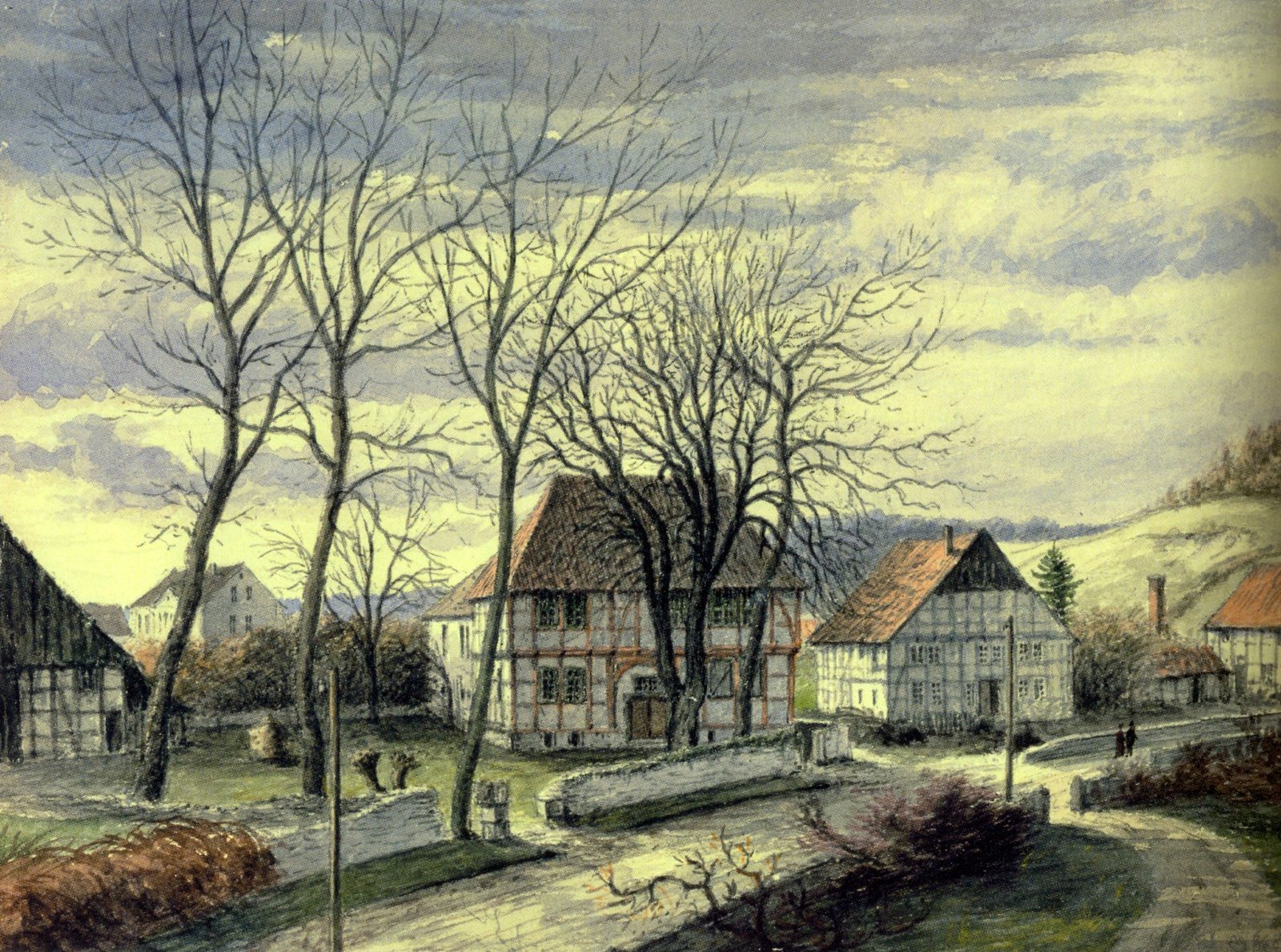
- Figure 2. Hof Wendt in Heiligenkirchen (1888) – Emil Zeiß. https://commons.wikimedia.org/wiki/File:Emil_Zei%C3%9F_Hof_Wendt_in_Heiligenkirchen_1888.png License: Public Domain.
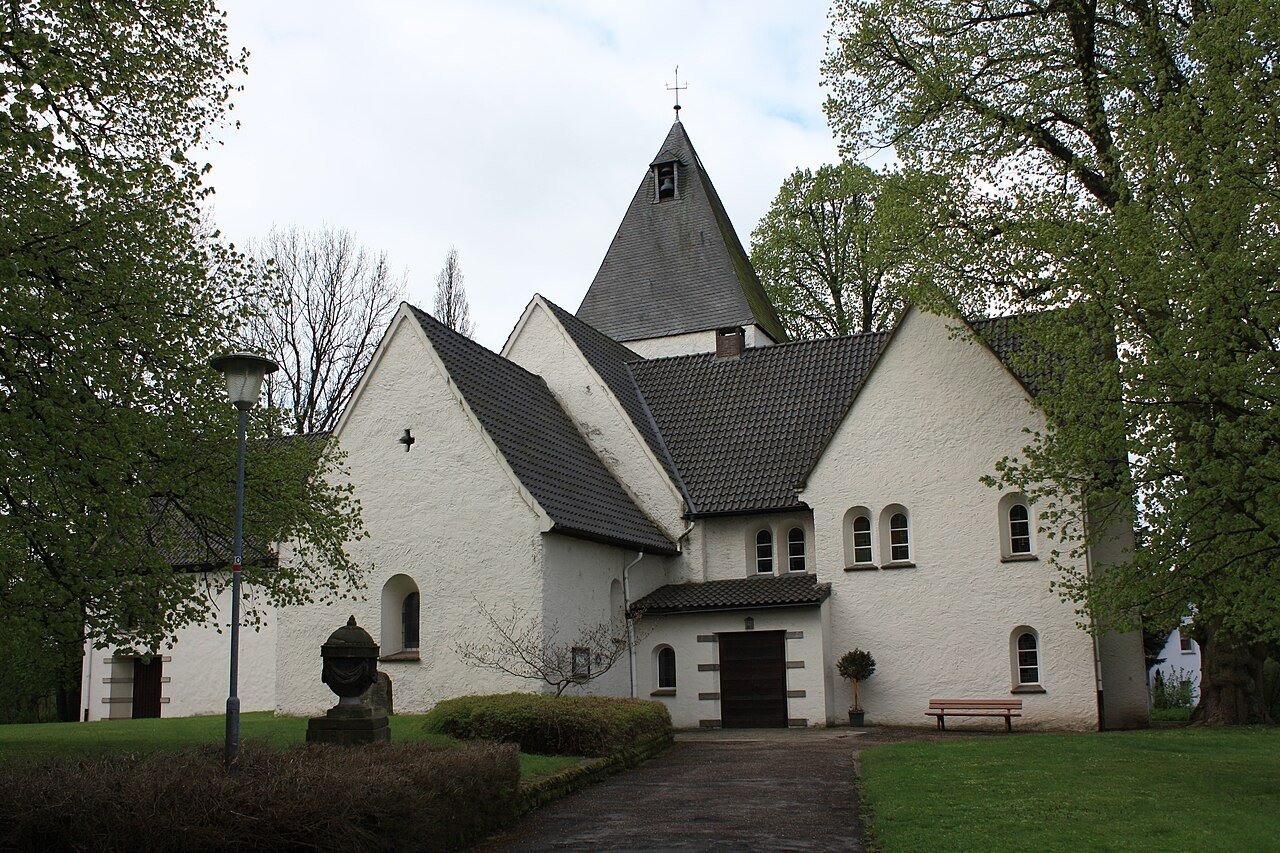
- Figure 3. Evangelisch-reformierte Kirche Bad Meinberg (Exterior) (Historical core (12th-16th c.) / modern photo). https://commons.wikimedia.org/wiki/File:Evangelische_Kirche_Bad_Meinberg.jpg License: Creative Commons Attribution-Share Alike 3.0 Unported (CC BY-SA 3.0). License link: CC BY-SA 3.0 (share-alike).
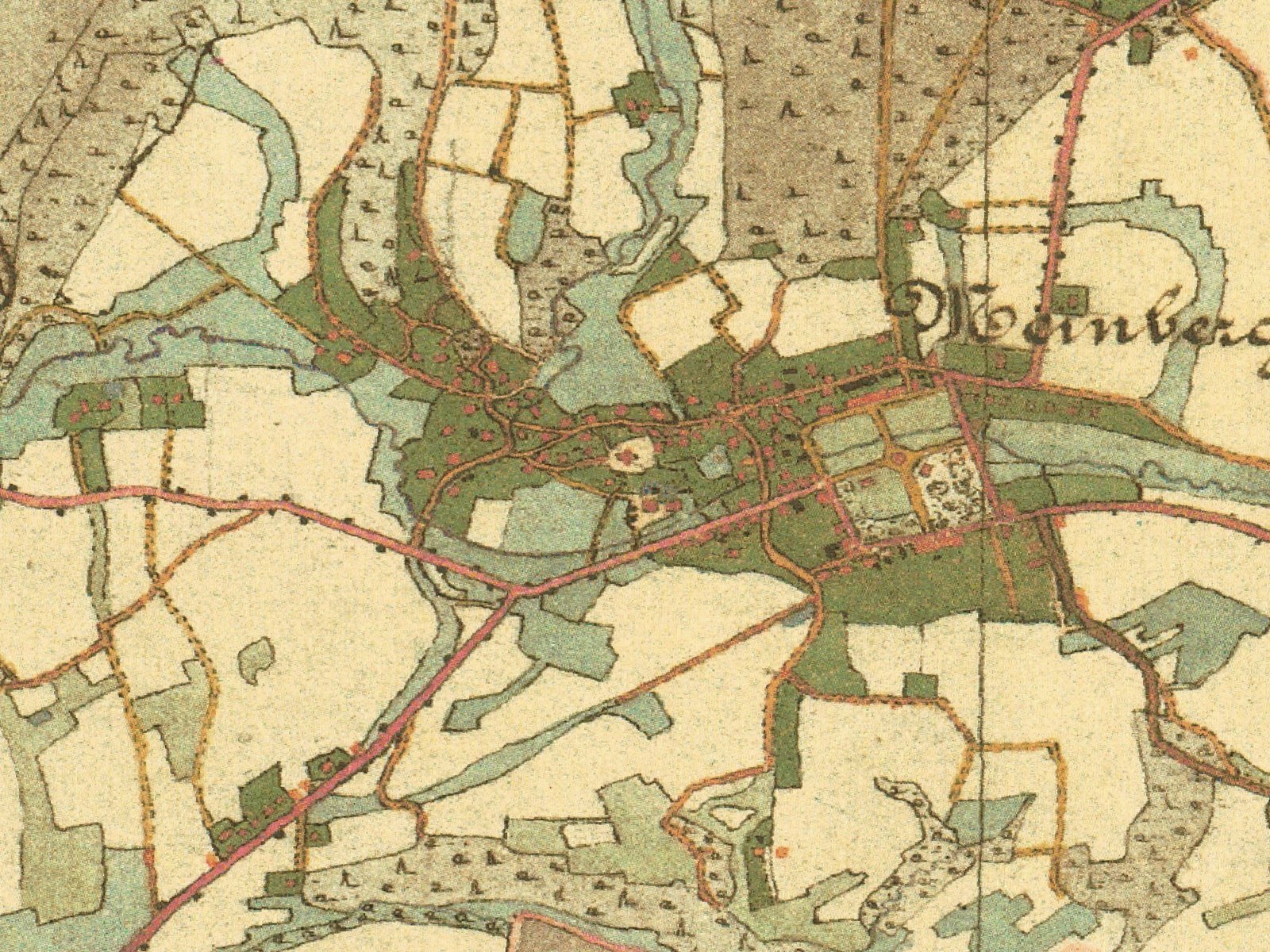
- Figure 4. Topographische Karte des Fürstenthums Lippe 1:25.000 – Meinberg (1881–1883). https://www.wms.nrw.de/geobasis/wms_nw_lippe?SERVICE=WMS&VERSION=1.3.0&REQUEST=GetMap&LAYERS=nw_lippe&CRS=EPSG:4326&BBOX=51.888,8.962,51.904,8.990&WIDTH=2000&HEIGHT=1500&FORMAT=image/png License: Datenlizenz Deutschland – Zero – Version 2.0 (dl-de/zero-2-0) / © Geobasis NRW.
- Figure 5. Lippe Timber-Framed Gable House Built 1843 in Wilberg (Detmolder Straße 50), entrance. Photo: Manfred Schröter (2024), CC BY-SA 4.0. Digitally restored (modified) from the original. https://commons.wikimedia.org/wiki/File:Wilberg,_Detmolder_Stra%C3%9Fe_50_Fachwerkgiebelhaus_von_1843,_Eingang.jpg License link: CC BY-SA 4.0 (share-alike).
- Figure 6. Marktplatz in Horn (1863) – Emil Zeiß. https://commons.wikimedia.org/wiki/File:Emil_Zei%C3%9F_Marktplatz_in_Horn_1863.png License: Public Domain.
- Figure 7. Historical View of Bad Meinberg: Kurhaus, Logierhaus 'Stern', Kurgarten und 'Rose' (1901). https://commons.wikimedia.org/wiki/File:BadMeinberg1901.jpg License: Public Domain.


