Kloepping branch · Generation 8 · ID I81
Anna Maria Elisabeth Klöpping
1752 – 1797-03-01
- Newly added by the research expansion; not yet independently re-checked
Facts
- Born
- 1752
- Birthplace
- Hof Meinberg Nr. 62, Principality of Lippe, Germany
- Died
- 1797-03-01
- Place of death
- Hof Meinberg Nr. 62, Principality of Lippe, Germany
Relationships
- Father Johann Hermann Klöpping (Colon in Meinberg Nr. 48) (not in tree)
- Mother Sophie Amelung (not in tree)
- Spouse / co-parent Carl Henrich Leweke wird Klöpping
Research notes
Eldest daughter and Anerbin (heiress) of Hof Meinberg Nr. 62. Brought the Klöpping surname and farmstead into the marriage with Carl Henrich Leweke.
Life and times
General historical context. This section describes the times and places this person lived in. It is not documented fact about them; “likely” means just that.
Places
- Hof Meinberg Nr. 62, Principality of Lippe, Germany 1752-1797
What was happening
- 1757 Battle of Hastenbeck and Seven Years' War Quartering · Principality of Lippe, Holy Roman Empire
As a young child on Hof Meinberg Nr. 62, Anna Maria would have likely experienced the distress and food shortages caused by French and Allied military movements across nearby Westphalian valleys. Source - 1767 Establishment of Meinberg as a Princely Spa · Meinberg, Principality of Lippe, Holy Roman Empire
Growing up in Meinberg, Anna Maria would have likely witnessed village transformation and increased demand for farm produce as sulfur springs were developed into a fashionable health resort. Source - 1770 Severe European Famine and Harvest Failures · Principality of Lippe, Holy Roman Empire
As a young woman on her family's farmstead, Anna Maria would have likely contended with cold rains, crop failures, and soaring rye prices that caused widespread rural hunger across northwestern Germany. Source - 1774 Inheritance of Hof Nr. 62 and Customary Marriage · Meinberg, Principality of Lippe, Holy Roman Empire
As the eldest daughter and heiress of Hof Meinberg Nr. 62, Anna Maria would have likely ensured the farmstead's legal continuation by bringing the hereditary Klöpping name and estate to her marriage with Carl Henrich Leweke. Source - 1784 Severe Winter and Great Frost of 1783-1784 · Westphalia and Lippe, Holy Roman Empire
Managing household domestic affairs, Anna Maria would have likely struggled to protect livestock and preserve limited vegetable and grain stores through the extraordinary freeze and subsequent spring floods. Source - 1792 Outbreak of the French Revolutionary Wars and Imperial Mobilization · Holy Roman Empire (Lippe)
Running her farmstead in Meinberg, Anna Maria would have likely felt increasing unease as German principalities mobilized against revolutionary France, leading to renewed war taxes and requisition quotas. Source
In context
Anna Maria Elisabeth Klöpping lived her entire forty-five-year life rooted to the soil of Hof Meinberg Nr. 62 in the Principality of Lippe. Born in 1752 to Johann Hermann Klöpping, Colon of Meinberg Nr. 48, and Sophie Amelung, she was raised in the disciplined traditions of a Lutheran farming family during the Seven Years' War. As the eldest daughter, Anna Maria held the vital status of Anerbin, or sole hereditary heiress, to Hof Nr. 62. In October 1774, she married Carl Henrich Leweke of Brakelsiek, who by Lippische legal custom adopted her ancestral surname to become Carl Henrich Leweke wird Klöpping. Together, they maintained the smallholding as Kleinkötter, cultivating rye and vegetables, tending dairy cattle, and spinning flax. Anna Maria guided the domestic economy through difficult years, including the catastrophic European crop shortages of 1770 and the devastating winter freeze of 1784. She also witnessed the scenic rise of her native village into a celebrated health resort following the development of Bad Meinberg's sulfur baths. Anna Maria died on Hof Nr. 62 in March 1797, leaving an enduring familial legacy in the parish of Meinberg.
Pictures from their world
Public-domain and openly licensed images of the places and times this person lived in. None are photos of this person; documents are period examples only.
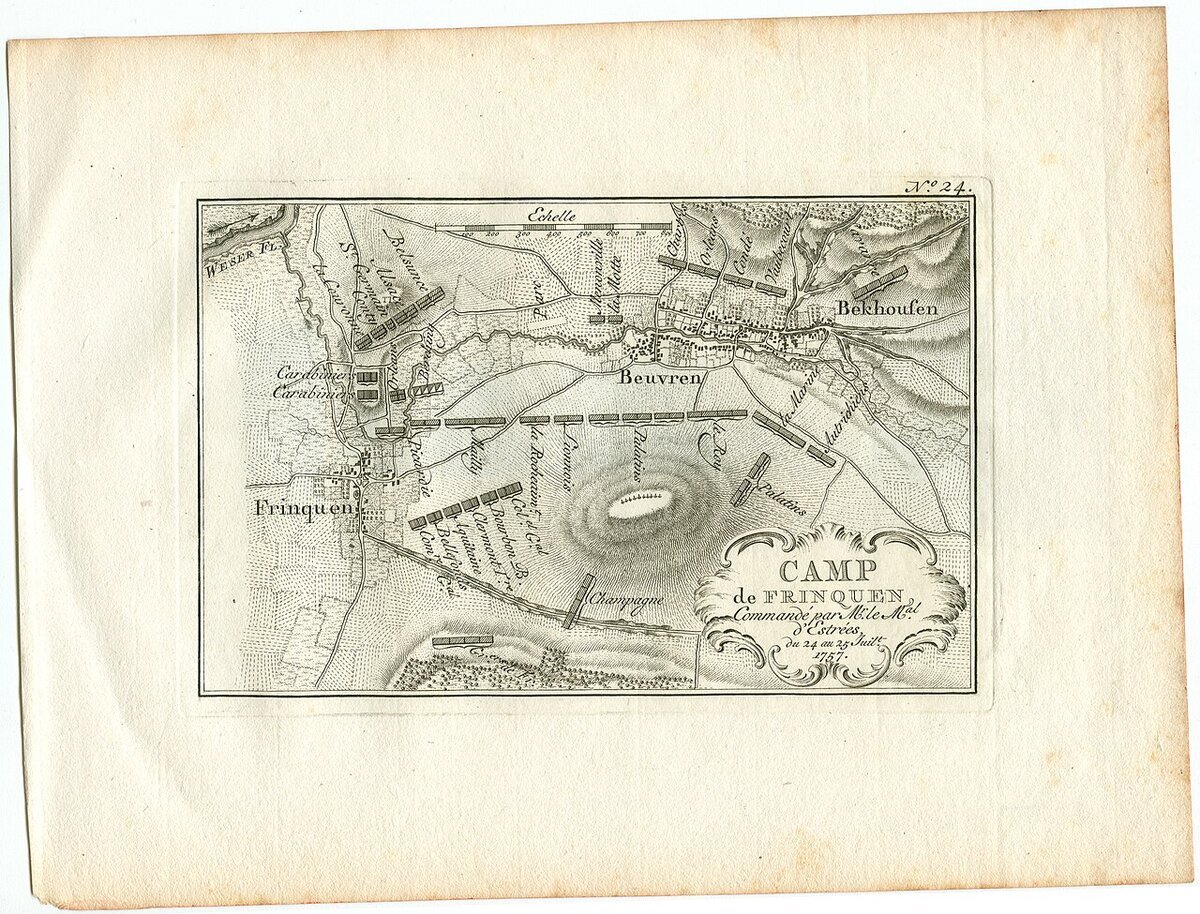
" Topographische Karten der Feldlager des Feldzuges von 1757 in Westfalen ", hier: " Nr. 24 ", " Feldlager Frenke (in Niedersachsen , mit Börry und Bessinghausen) befehligt durch Seine Durchlaucht den Marschall von Estrées " ; Kupferstich von Jacobus van der SchleyJakob van der Schley, 1757. Public domain. Source

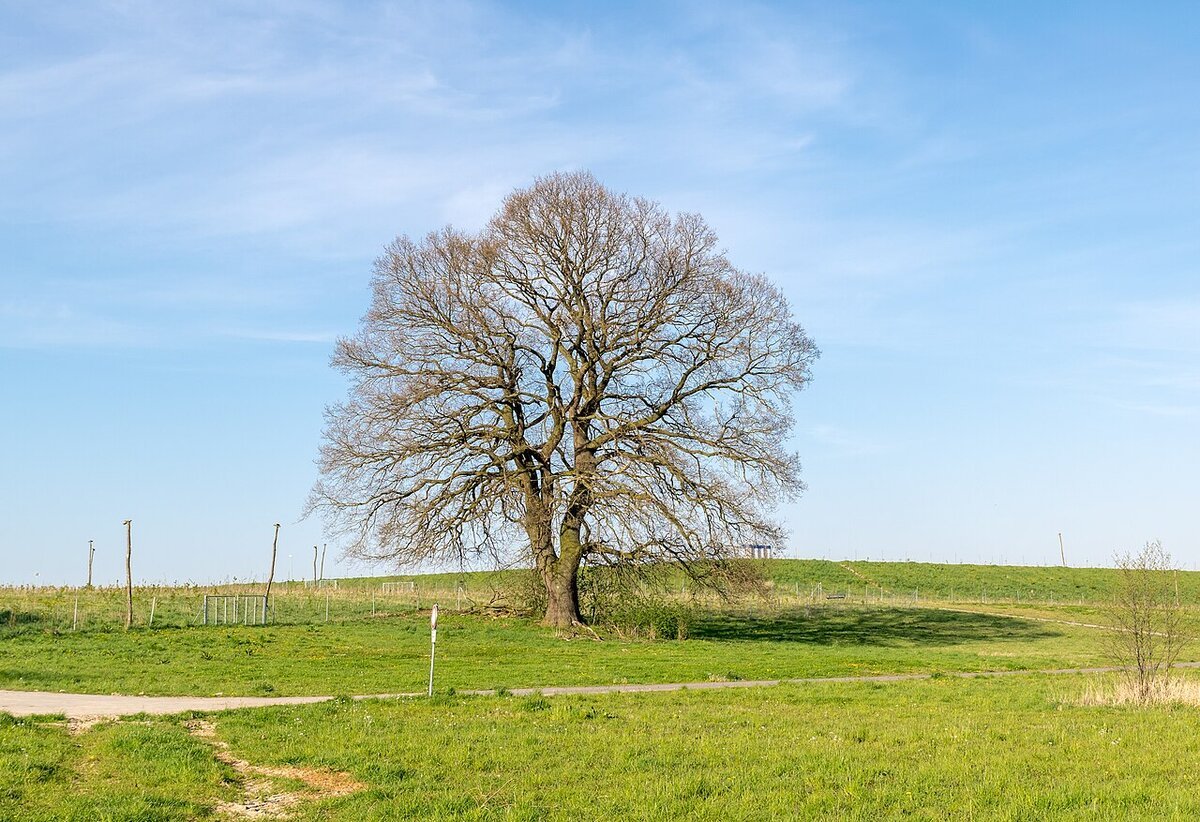
Naturdenkmal 1 Eiche nordöstlich der Kläranlage am Niederbeller Bach in Horn-Bad Meinberg-BelleTsungam, 1757. CC BY-SA 4.0 (share-alike). Source
