Manor branch · Generation 6 · ID I23
Julien Maximilien Menard
1793-08-21 – 1858-12-18
Facts
- Born
- 1793-08-21
- Birthplace
- St. Jacques, Montcalm, Quebec
- Died
- 1858-12-18
- Place of death
- Monroe, Monroe Co., MI
Relationships
- Father Jacques Menard
- Mother Marie-Thérèse Desmarais
- Spouse / co-parent Marie Ladouceur
- Child Julius Manore / Menard
Research notes
Confirmed: Julien Maximilien Ménard, born 21 Aug 1793 in St-Jacques-de-Montcalm; married 3rd Marie Ladouceur on 14 Aug 1843 at Ste-Mélanie, Joliette; moved family to Monroe, MI by 1858.
Life and times
General historical context. This section describes the times and places this person lived in. It is not documented fact about them; “likely” means just that.
Places
- Saint-Jacques-de-Montcalm, Lower Canada (Quebec) 1793-ca. 1843
- Sainte-Mélanie, Lower Canada (Quebec) ca. 1843-ca. 1856
- Monroe, Monroe County, Michigan, USA ca. 1856-1858
What was happening
- 1812 War of 1812 and Lower Canada Militia Mobilization · Lower Canada (Quebec)
Reaching young adulthood in Montcalm during the War of 1812, Julien would have likely faced militia call-ups and civic mobilization to defend the province against American invasion. Source - 1832 Cholera Epidemic of 1832 in Lower Canada · Lower Canada (Quebec)
Living along the St. Lawrence and Richelieu trade corridors, Julien would have likely witnessed strict quarantines and panic as cholera decimated thousands in Montreal and outlying parishes. Source - 1837 Lower Canada Rebellion (Patriote War) · Montcalm and Lanaudière, Lower Canada
Farming in a heartland of French-Canadian patriotic sentiment, Julien would have likely witnessed military curfews and local political clashes between Patriote rebels and British authorities. Source - 1840 Act of Union and Abolition of Lower Canada · Province of Canada (Quebec)
Julien would have likely navigated the political amalgamation of Upper and Lower Canada, which sparked widespread cultural grievance among French Canadians. Source - 1854 Abolition of the Seigneurial System in Lower Canada · Canada East (Quebec)
As a tenant habitant in the Lanaudière region, Julien would have likely felt the economic and legal transitions as ancient feudal dues and censitaires were finally commuted. Source - 1857 Panic of 1857 in Michigan and the Great Lakes · Monroe County, Michigan, USA
Having recently relocated his family to southeastern Michigan, Julien would have likely experienced the regional economic downturn and bank failures that contracted Great Lakes agricultural markets. Source
In context
Julien Maximilien Ménard's life embodied the dramatic nineteenth-century transition from traditional French-Canadian habitant society to cross-border frontier resettlement. Born in Saint-Jacques-de-Montcalm in 1793, he grew up in the fertile St. Lawrence lowlands northeast of Montreal during an era of significant social friction under British colonial administration. Reaching maturity during the War of 1812, Julien witnessed rural Quebec's rapid demographic expansion, agricultural soil exhaustion, and the acute political turmoil of the 1837 Lower Canada Rebellion. In 1843, following the loss of earlier spouses, he married Marie Ladouceur in Sainte-Mélanie, establishing a home in the Laurentian foothills of Joliette County. By the 1850s, confronting dwindling agricultural prospects and rural overcrowding in Canada East, Julien made the monumental decision in his sixties to relocate his family south of the border. Moving to the vibrant French-speaking agricultural community around Monroe, Michigan, near western Lake Erie, Julien spent his final years establishing new roots for his descendants before his death in December 1858 at age sixty-five.
Pictures from their world
Public-domain and openly licensed images of the places and times this person lived in. None are photos of this person; documents are period examples only.
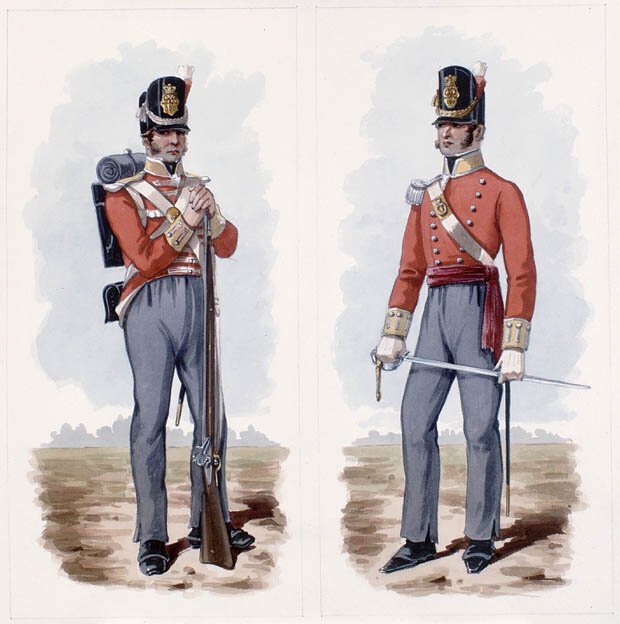
A battalion company private and officer of the 100th (H.R.H The Prince Regent's County of Dublin)Regiment of FootArtist: Milner, Frederick M., 1889-1939., 1915-01-01. Public domain. Source

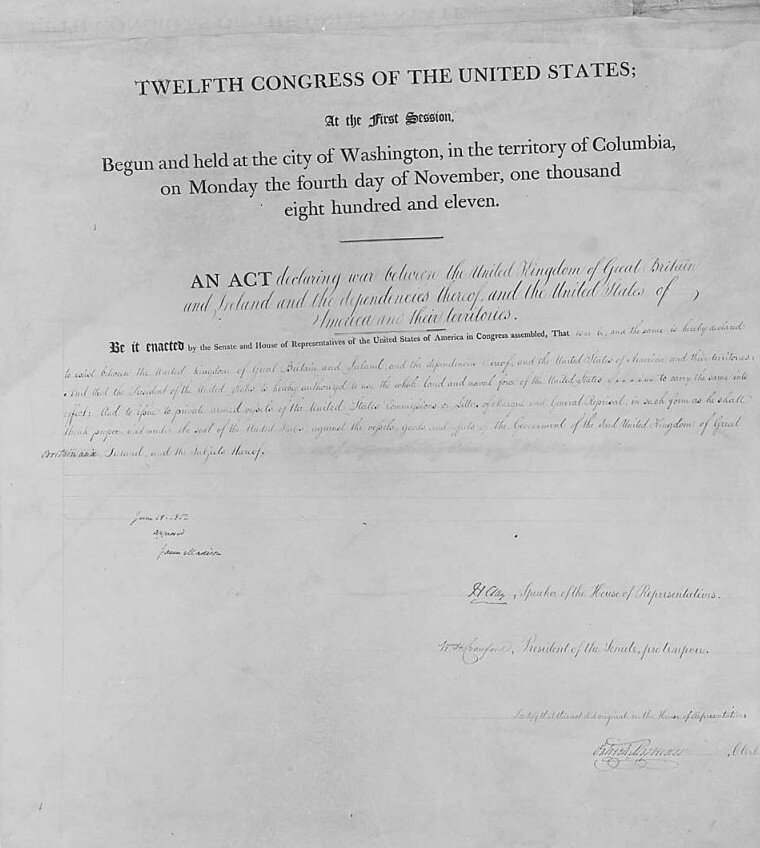
Period example — illustrative, not this person’s record
Shown as a period example of the kind of record or publication of the time; it is not a record of this person or family.US, 1812. Public domain. Source

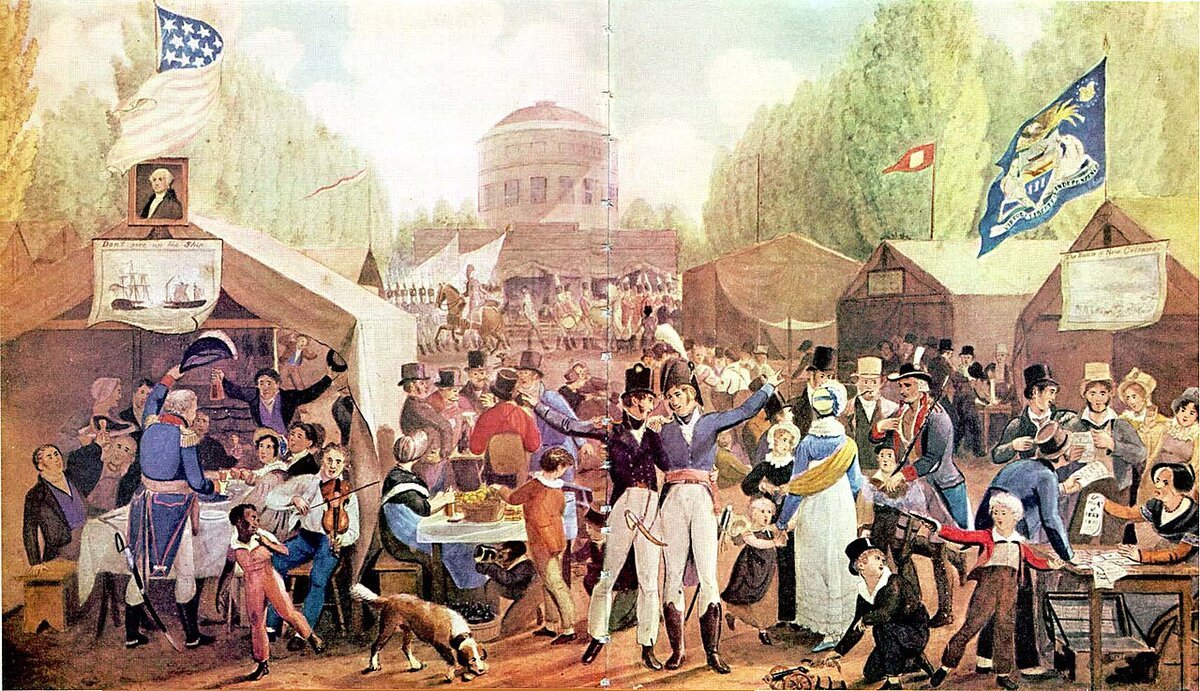
A Depiction of The Celebrations of July 4th 1819John Lewis Krimmel, 1819. Public domain. Source

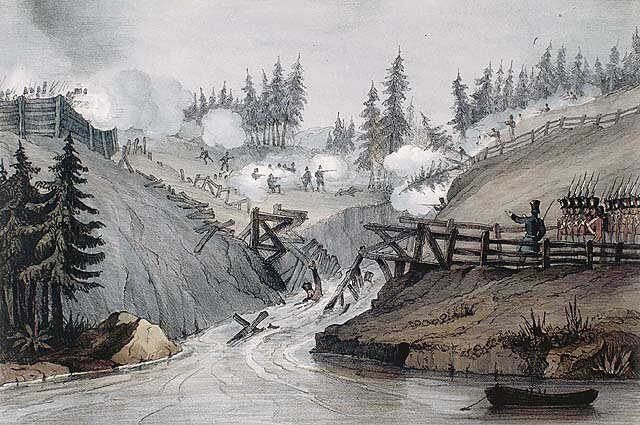
View of Government and Rebel soldiers fighting at a fortified Pass. This is the fifth image in the volume, and was numbered II-5a.Beauclerk, Charles (1813-1861), 1840. Public domain. Source
